מי מפחד מעירום גברי? מי מפחדת להיות אובייקט מיני?
Who's afraid of male nude? Who's afraid of being a sexual object?
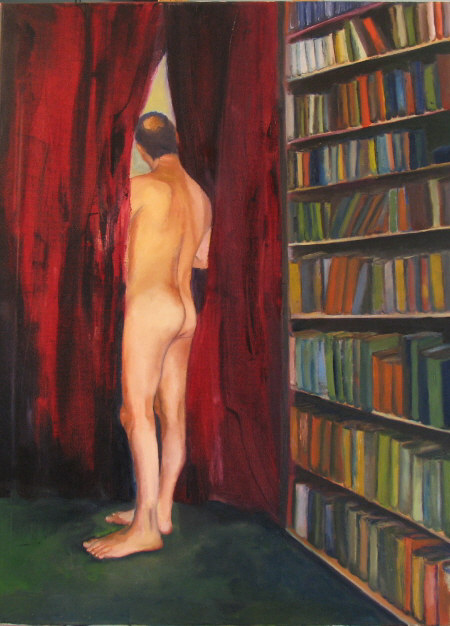
Who's Afraid of Male Nude? On Ora Ruven's Work
Professor Tal Dekel · Exhibition text · FEMOSTERONE
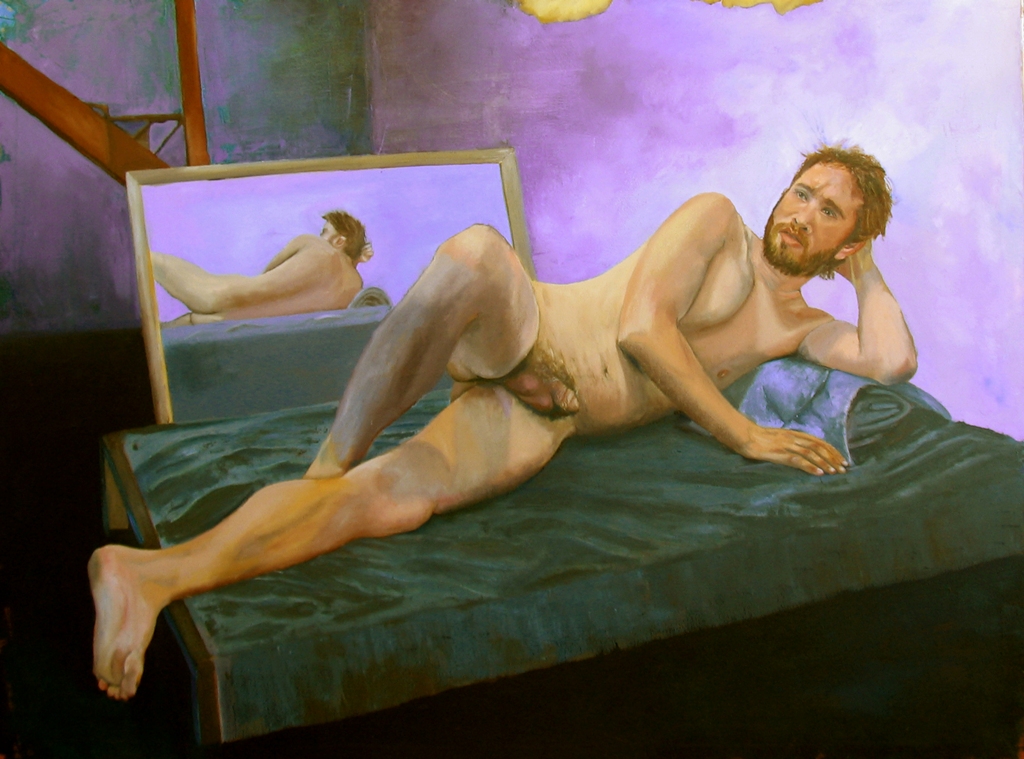
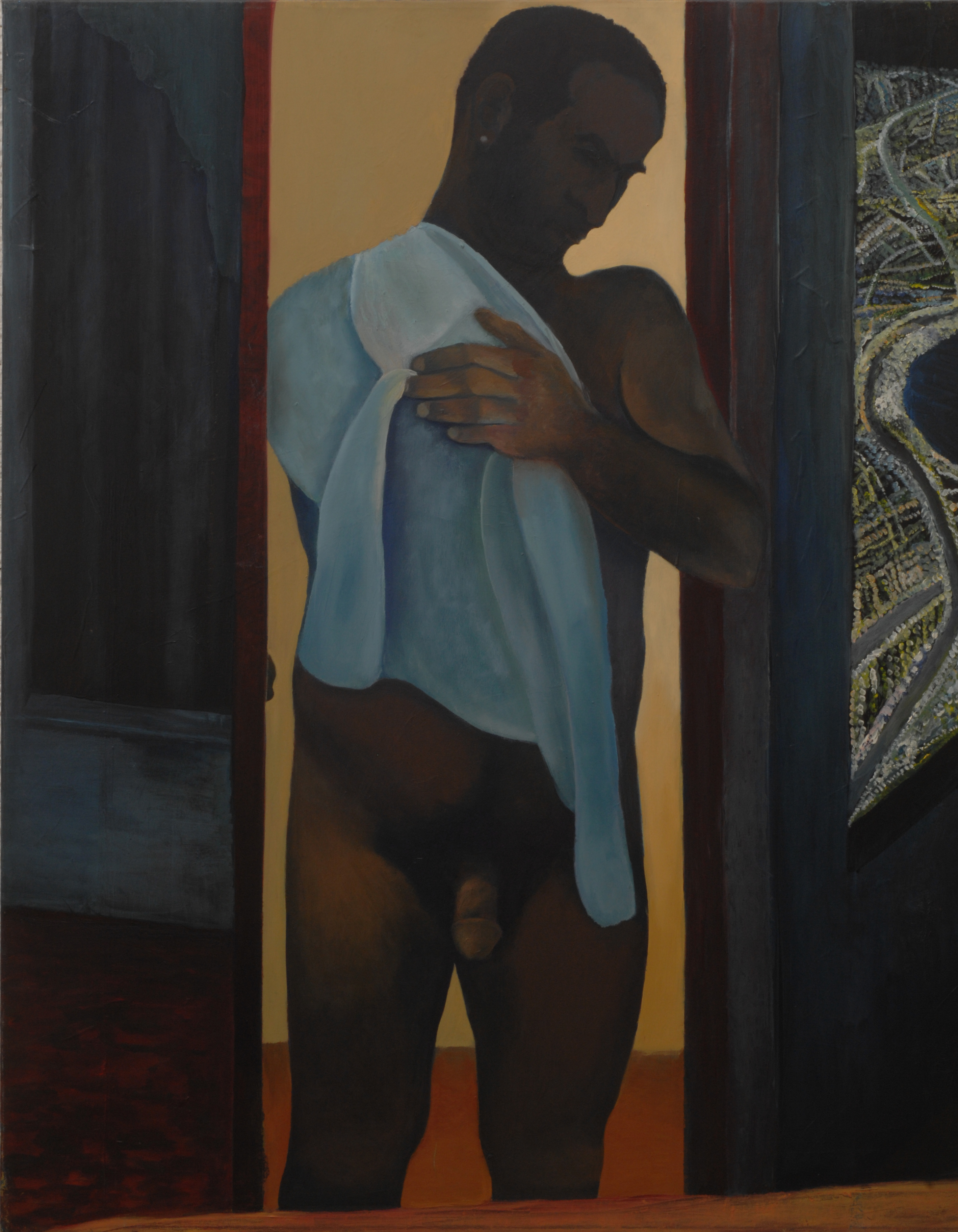
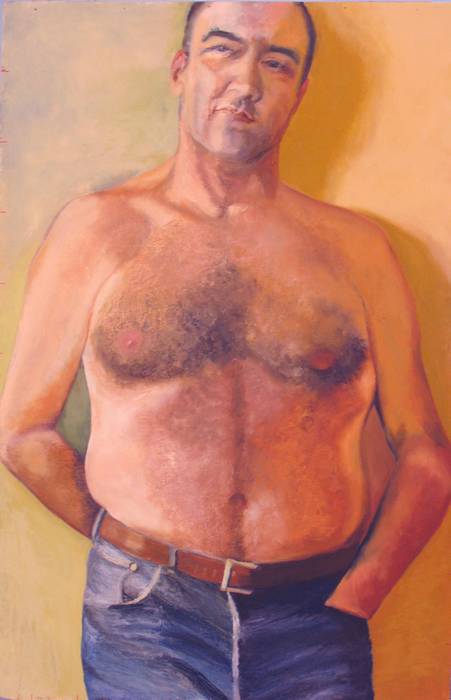
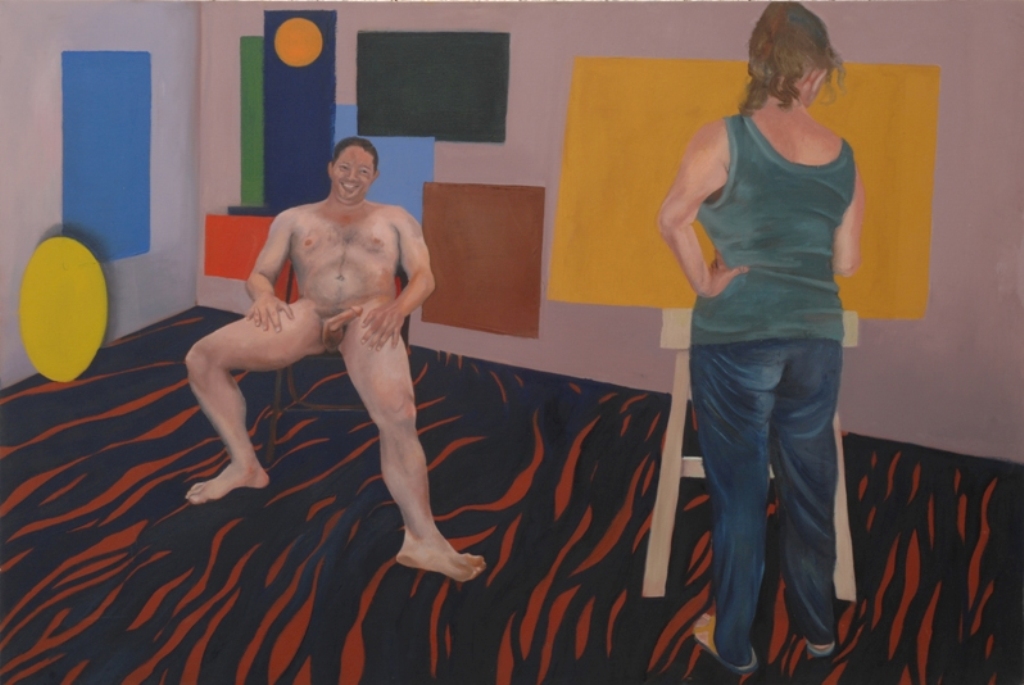
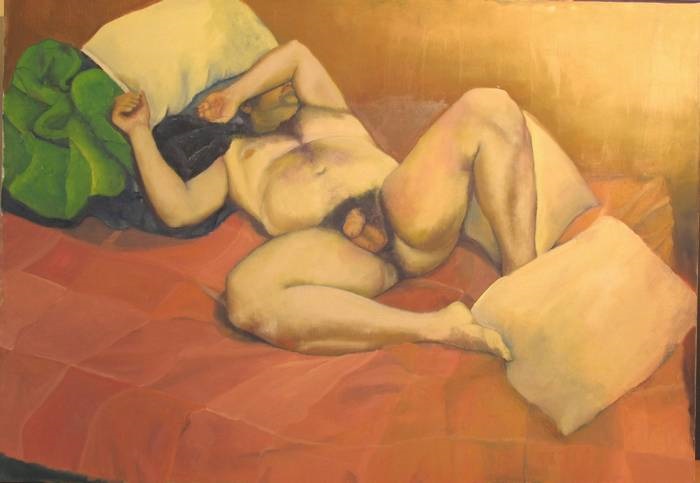
At the centre of the work stand large-scale paintings of male nudes, alongside digital pieces that likewise show such nudity. In the digital works the naked man is presented as an object of seduction and voyeurism, swathed in lace, soft fabrics, and gold; parts of his body peep at the viewer while his face stays hidden. The gaze is erotic, verging on pornographic, addressed to the partner in looking who shares the voyeurism with sympathy�€”lace, gold, lit candles, romance. The paintings, too, cast the naked man as subject to voyeurism and seduction, reversing the gaze traditionally held by the male artist towards the female model. In one painting in the series, a naked man lies loosely wrapped in lace on soft golden sheets; intimate parts of his body peer at the viewer while his face is veiled. In another, a man looks straight at his partner-painter, sharing the erotic adventure they have entered together. The men who model for Ruven are not professional models and do not match standard ideals of the beautiful male body.
The pornography industry is a case study from which much can be learned about mainstream attitudes towards the female body�€”which differ sharply from how women usually depict men’s bodies. Male-oriented mainstream porn mostly shows the woman’s body in fragments, in extreme close-up, objectifying her and erasing her subjectivity. It is pornography of functionality alone.
Ruven’s works reflect the long and winding path feminist artists have walked since the 1970s until today in portraying the male body.
Man as an object of women’s desire, in Ruven’s treatment, is a reversal of roles. Many women artists over recent decades have taken up the reversal of traditional cultural roles in their work. Some feminist projects cast the artist as strong opposite a weakened man, sometimes figuring sex as harsh or threatening. In Ruven, the reversal has another character: the man is the object of the woman’s desire�€”rather than the power play of man/woman relations, a new agenda is set in which the woman addresses her object through desire mixed with tenderness, beauty, and romance. The artist does not stand for a woman seizing the man’s powerful place to prove her strength against him; she expresses her femininity in relation to the man. At the same time, her power as woman and as artist is undeniable, embodied in men for whom modelling is not a profession yet who undress before her for painting and photography.
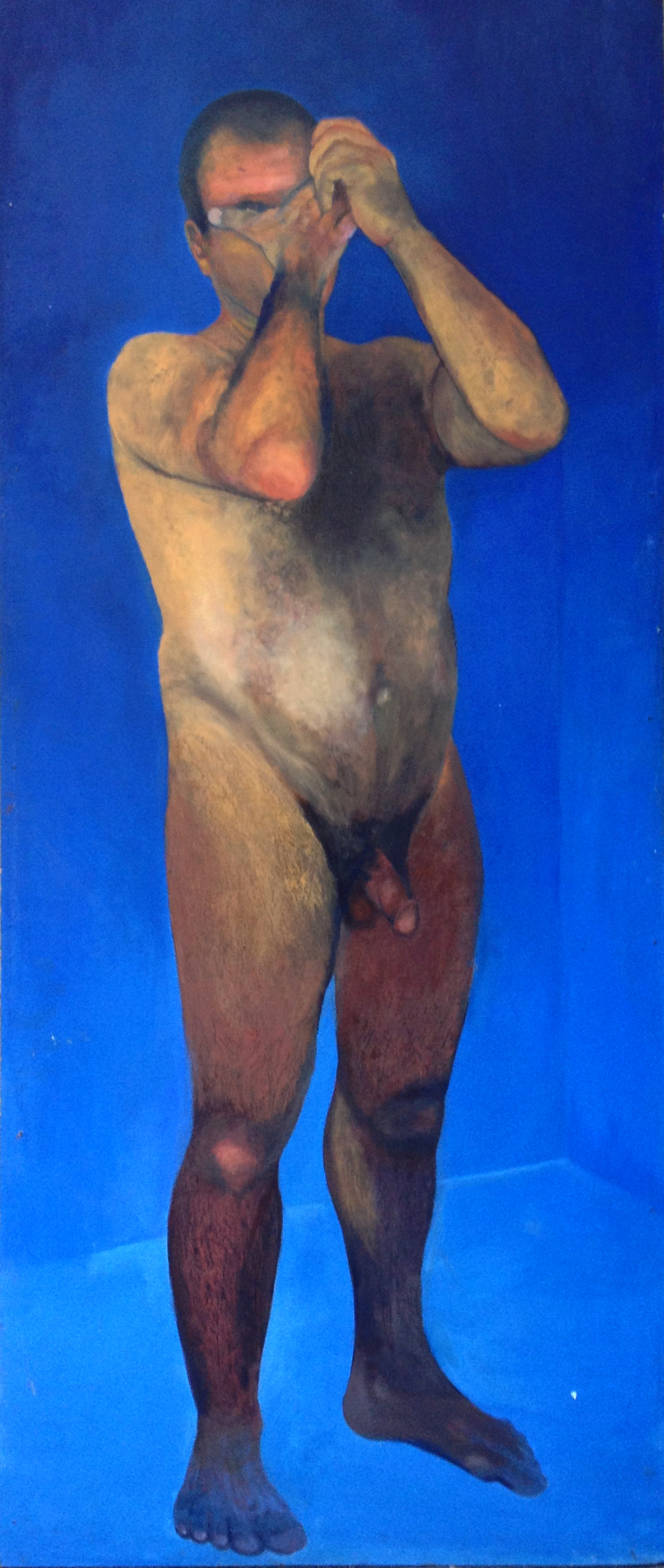
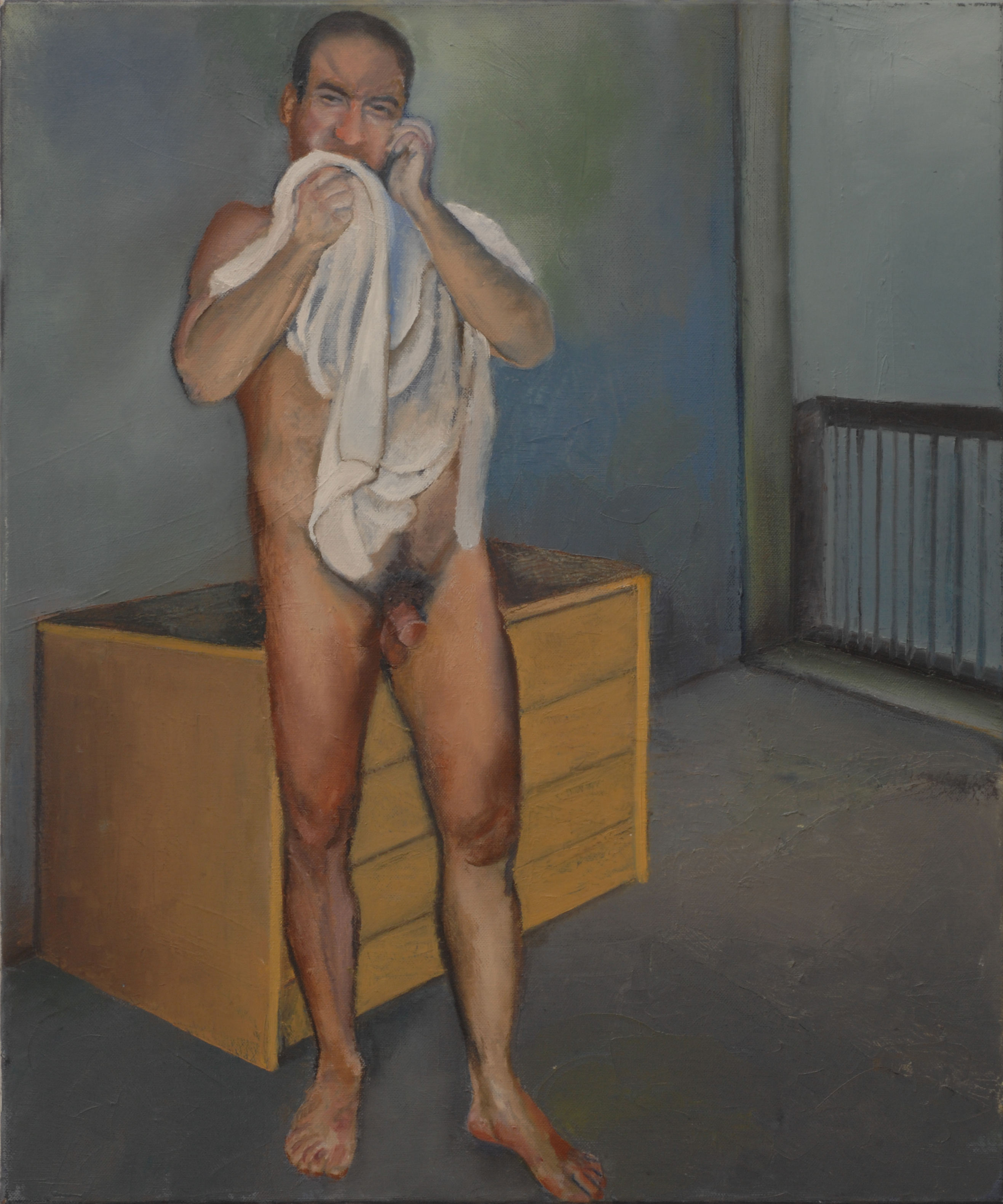
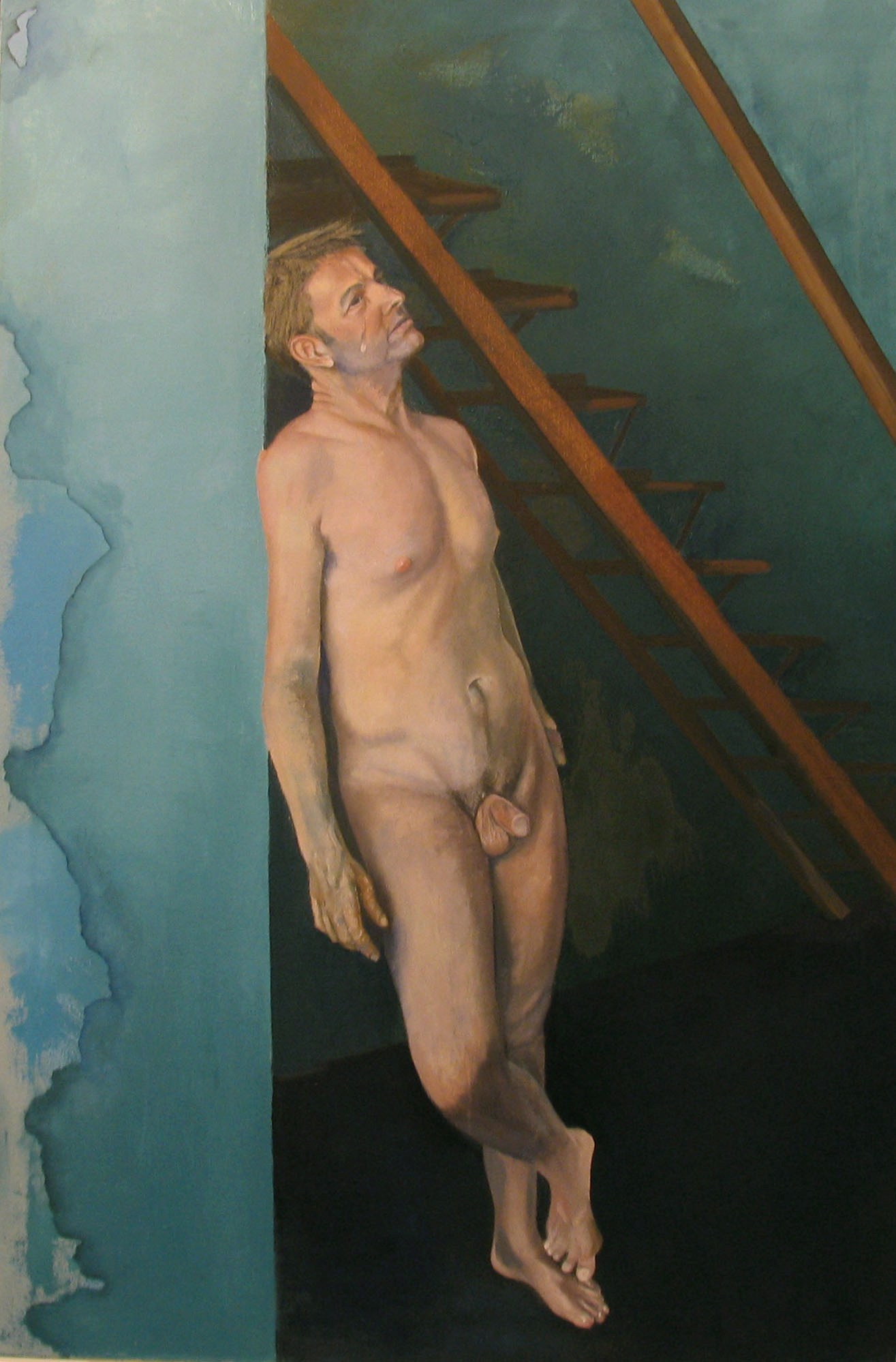
The paintings are realistic, usually medium in format, and show older men�€”authentic, far from the muscular, sculpted, conventionally handsome model. Nudity is sometimes so direct as to embarrass. Most painted men sit in an armchair in a classic model pose, or lie on a bed, holding the viewer/painter’s gaze. Another is “caught” asleep in the nude, unaware of the painting under way; in another work a man stands, cupping his face in his hands, his genitals awkwardly exposed to the viewer.
The painting manner is traditional and the scene classical�€”a nude model seated before the painter�€”yet the content that accrues from this pairing is not classical or traditional in the least.
At first glance male nudity seems wholly normal for viewers used to maximal bodily exposure in the media. Yet a survey of contemporary art shows that while the male nude appears in much work by men, it is almost wholly missing from work by women artists.
Turn to the last few decades of history: the time when women were finally admitted to the canon; the feminist revolution of the early 1970s that brought new winds of equality, freedom of action and artistic production, and sexual freedom�€”so that early feminist artists could say what was on their minds. They used that freedom only rarely to describe the male nude, and when they did, protest was the loudest note in the work. Many painted men as deformed, frightening, ridiculous, pathetic, or repellent�€”voicing the pain of patriarchal history, a history that left little room for empathy, sensuality, eroticism, or love between the sexes, or for a woman’s love of a man.
Women’s sexuality�€”that dark unknown, as the father of psychology put it�€”is handled by the artist Ora Ruven with honesty and daring.
Over time parts of that void have been filled. The Women’s Liberation Movement, born in the late 1960s in the United States, and the waves of feminism since the 1970s, opened talk of female sexuality and made space for subjects such as love between women, masturbation, and in general women’s right to their own bodies. Still, early theoretical writing and art seldom lingered on women who wanted to go on having relationships with the men in their lives. Research on women’s sexuality in relation to men was scarce, and feminist women seeking to live equally with male partners found few practical guidelines. How, then, can a woman artist look at a man, study him, paint him? Does a woman not see a man differently from how he sees her? That question bites all the more if she wants to keep a feminist position�€”and it is precisely where Ruven stands in her work.
Perhaps another reason stopped women from taking up the male nude. Perhaps the taboo on male nudity still burns so fiercely that breaking it feels impossible. A woman who shows sexual interest in a man may still fear ostracism, the social finger that labels her loose or promiscuous. Perhaps the “respectable” woman in the twenty-first century still deems herself “worthy” only insofar as the “normative” man deems her worthy�€”as a sanctified mother of his children, almost asexual, not the light-minded model for a nude, nor an artist who paints male nudes herself. In other words, the woman has not yet broken free of a self-image dictated by male culture.
This perception leads us to John Berger’s claim in Ways of Seeing (1972) about the power of the male gaze:
Men act and women appear.
That is, the man exercises power over the woman, who serves as a passively present object. Berger argued that women are not only seen by men�€”they also see themselves through men’s eyes, from the viewpoint of the male onlooker. For him this is not narcissism but the constitution of identity: women’s identity is effectively fixed only by how they are reflected in the male other’s eyes. This principle, Berger held, governs not only women’s relation to themselves but most kinds of relations between men and women.
As Tanya Augsburg wrote in the 2011 catalogue Man as Object �€“ Reversing the Gaze, Berger’s text paved the way for theorizing the gaze in feminist film theory, beginning with Laura Mulvey’s seminal essay “Visual Pleasure and Narrative Cinema” (1975). Mulvey built on Berger, drawing on psychoanalysis to describe an active/passive heterosexual division of labour steering film narrative. Augsburg explains that for Mulvey, women are depicted as sexual objects for the male gaze, as spectacle and icon; men bear the spectator’s look but cannot bear sexual objectification. E. Ann Kaplan, in Women and Film: Both Sides of the Camera (1983), was among the critics who developed this line of thought.
We can therefore widen the male gaze beyond desire to Berger’s distinction between saint and whore�€”a distinction women artists still often adopt today�€”so that the male nude is seldom treated, or is treated without much sympathy.
Yet few theoretical writings or artistic examples from the 1970s and 1980s offered feminist women who wished to keep having relationships and sexual intimacy with the men in their lives a clear path. Few answers or ground rules reached early feminists who wanted to stay with male partners as sexual equals. Books and articles on female sexuality in tandem with men’s were hard to find then. That question is now posed in the work of the contemporary Israeli artist Ora Ruven.
Ora Ruven has reclaimed the gaze. Yet in her painting, where she looks at the man’s eyes and genitals and paints them with the same blunt force, there is no domination, no possessiveness, no objectification�€”unlike countless female nudes men have painted through art history.
The gaze�€”the main tool of objectification in art�€”is here the artist’s as she studies the male nude, thereby placing herself in a position of power.
But has she turned that gaze and the power it gives her into an instrument of control?
In the paintings the man appears in full masculinity, full presence. He stands upright, rendered in warm colours and pools of light�€”paintings that respect him as subject. This is a proposal to see nudity and sexuality as something free of domination. That is the nature of the female gaze on the nude: it ties eroticism and desire to sexuality, warmth, and love�€”not to domination. In that, the female gaze on the nude differs from the male gaze, which expresses desire for conquest and possession.
Ruven’s works stand for a femininity not framed by dominant male culture. It is liberated femininity, built by itself, while resting on the freedom first feminist foremothers won for her�€”freedom still far from fully realized.
מי מפחד מעירום גברי - על עבודתה של אורה ראובן
פרופסור טל דקל · טקסט תערוכה · FEMOSTERONE
במרכז העבודה ניצבים ציורים גדולי מימדים של עירום גברי. לצידם עבודות דיגיטאליות שאף בהן עירום כזה. העבודות הדיגיטליות מציגות את הגבר העירום כמושא לפיתוי ולמציצנות, עטוף בתחרות, במצעים רכים ובזהב, חלקי גופו מציצים אל המתבונן ופניו נסתרות. זהו מבט פורנוגראפי משהו, הפונה אל השותפה למבט, וחולק איתה את המציצנות ברכות, בסימפטיה, תוך יצירת אווירה וסביבה מעוררות חמדה בלב נשים רבות – תחרה, זהב, נרות דולקים, רומנטיקה. הפורנוגרפיה שעושים גברים שונה בתכלית מזו שמפיקות נשים. פורנו מיינסטרימי המיועד לקהל צריכה גברי בעיקרו מציג את איברי גופה של האישה, לרוב בפרגמנטריות, בקלוז-אפ מקסימלי, תוך החפצת האישה ושלילת הסובייקטיביות שלה. זוהי פורנוגרפיה של פונקציונאליות בלבד.
הגבר כמושא לפיתוי נשים – זהו היפוך היוצרות.
אמניות רבות בעשרות השנים האחרונות עסקו ביצירותיהן בהיפוך תפקידים תרבותיים מסורתיים. חלקן הציגו את עצמן כחזקות מול גבר מוחלש, ופעמים רבות הציגו את המין כדבר רע או מאיים. אך בעבודה זו ההיפוך נושא אופי אחר: הגבר הוא מושא לתשוקת האישה, כלומר – במקום להתייחס לכוחנות שבמערכת היחסים גבר/אישה, יש כאן קביעת סדר יום חדש, שבו האישה מתייחסת אל מושאה מתוך תשוקה מעורבת ברכות, יופי ורומנטיקה. האמנית אינה מייצגת אישה המנסה לתפוס את מקומו הכוחני של הגבר, ולהציג את כוחה לעומתו, אלא אישה המבטאת את נשיותה ביחס לגבר. יחד עם זאת אין להתעלם מכוחה של האמנית המגולם בנכונותם של גברים שדוגמנות אינה מקצועם – להתפשט בפניה לצורך הציור והצילום.
הציורים ריאליסטיים, בפורמטים בינוניים בגודלם בדרך כלל, וניבטים בהם גברים מבוגרים, אותנטיים,שרחוקים מרחק רב ממראה הדוגמן השרירי והמחוטב, יפה התואר. העירום ישיר לפעמים עד כדי מבוכה. רוב הגברים המצוירים יושבים בכורסה, בתנוחה קלאסית של מודל, או שרועים על מיטה, ומישירים מבט אל המתבונן/הציירת. גבר נוסף "נתפס" כשהוא ישן בעירום וכלל אינו מודע למעשה הציור המתרחש, ובציור אחר – עומד הגבר ומליט את פניו בכפות ידיו, כשערוותו חשופה בפני הצופה בשלמות מביכה.
סגנון הציור מסורתי והסצנה קלאסית - מודל יושב בעירום מול הציירת. ועם זאת התוכן המתגבש מצירוף זה איננו קלאסי-מסורתי כלל וכלל.
במבט ראשון דומה שהעירום הגברי הוא נורמטיבי לחלוטין לצופים הקונטמפורריים האמונים על חשיפה מקסימלית של גופות עירומים בעקבות אמצעי המדיה. ובכל זאת סקירה של אמנות עכשווית תגלה שהעירום הגברי אמנם מצוי ברבות מהעבודות של אמנים גברים, אך הוא נעדר כמעט לגמרי מעבודת נשים יוצרות.
נפנה את מבטנו אל ההסטוריה של עשרות השנים האחרונות; אל הזמן שהתיר סופסוף לנשים להיכנס כאמניות לקאנון ההסטורי; אל הזמן הפמיניסטי שהביא רוחות חדשות של שוויון ושל חופש מיני ואיפשר לנשים אמניות להביע את אשר על ליבן. נשים השתמשו בחופש הזה מעט מאד לתיאור העירום הגברי, ומשעשו זאת, היתה המחאה הקול המרכזי של עבודתן. רבות מהן הן ציירו גברים מעוותים, מעוררי אימה, מגוחכים, פתטיים, או דוחים. כך הן בטאו את הרגשות הקשים שהיו מנת חלקן לאורך ההיסטוריה הפטריארכאלית, הסטוריה זו שלא הותירה מקום גדול לביטויים של אמפתיה, חושניות, ארוטיקה,אהבה בין המינים - אהבת אישה לגבר.
מיניות האישה – אותו חור שחור ולא ידוע, כפי שטבע זאת אבי הפסיכולוגיה – מטופלת בידי האמנית בצורה כנה ואמיצה.
עם הזמן נמלאו חלקים מהחור הזה. "התנועה לשחרור האישה" שנולדה בסוף שנות הששים בארה"ב, וגלי הפמיניזם מאז שנות השבעים של המאה העשרים, פתחו את הפתח לשיח ער ונרחב אודות המיניות הנשית ונתנו מקום לאהבת נשים, לאוננות, למעשה האהבה בין גבר לאישה, אך מעט מאד התעכבו בכתבים התיאורטיים ובאמנות על אותן נשים שמעוניינות להמשיך ולקיים יחסים עם הגברים שבחייהן. לא ניתנו מענה או קווי יסוד עבור נשים פמיניסטיות, המבקשות להתקיים ולחיות עם הגברים שבחייהן בצורה שוויונית. קשה למצוא מחקרים הבודקים את מיניותה של האישה ביחס לגבר ואת מבטה בו. האם אין לאישה מבט על הגבר?
שאלה נדירה זו מוצגת שוב ושוב ביצירתה של אורה ראובן.
ואולי סיבה אחרת מנעה מנשים לעסוק בעירום גברי. אולי הטאבו על העירום הגברי עדיין צרוב בהן בעוצמה כזו שהפרתו לא אפשרית. ייתכן כי אישה המגלה עניין מיני בגבר עדיין מסתכנת בנידוי, עדיין חוששת מהאצבע החברתית שתצביע עליה ותקטלג אותה כזנותית, כמופקרת. אולי האישה ההגונה במאה העשרים ואחת עדיין תופסת את עצמה "ראויה" כפי שהגבר "הקלאסי" תופס אותה כראויה – כדמות קדושה שהיא אם ילדיו, יצור א-מיני כמעט, ולא זו קלת הדעת המשמשת מודל לציור עירום, או לחילופין מציירת בעצמה עירום גברי. כלומר – האישה טרם השתחררה מתפיסת העצמי שלה המוכתבת על ידי תרבות גברית.
תפיסה זו מובילה אותנו לאמירתו של ג'ון ברגר במאמרו Ways of seeing על כוחו של המבט הגברי המכונן את מעמדו כסובייקט ואת מעמדה של האישה כאובייקט למבט, מבט המכונן את האישה לאמץ את מבטו של הגבר ולראות את עצמה בעיני הגבר – כאובייקט לתאוותו. אפשר להרחיב כאן את מבטו של הגבר מעבר לתאווה, אל עבר אבחנתו של ברגר בין הקדושה לקדשה, מבט שהאישה האמנית עדיין מאמצת בימינו, ולכן אינה עוסקת באהדה בעירום גברי.
אורה ראובן נכסה לעצמה את המבט. אך בציור שלה, שבו היא מתבוננת בעיניו של הגבר ובערוותו ומציירת אותם באותה מידה של ישירות ועוצמה – אין כוחנות ואין רכושנות ואין החפצה - שאותם אנחנו מכירים מציורי העירום הנשי שנעשו ברבבות לאורך תולדות האמנות.
המבט, הכלי המרכזי של ההחפצה באמנות, משמש בעבודות אלה את האמנית כשהיא המתבוננת בעירום הגברי ובכך מציבה את עצמה בעמדת כוח.
אך האם הפכה את המבט ואת עמדת הכוח שהמבט מקנה לה - לכלי של שליטה?
בציורים מוצג הגבר במלוא גבריותו, במלוא נוכחותו. בצבעים חמים ובמוקד של אור, ציורים המכבדים אותו.
זוהי הצעה לראות בעירום ובמיניות משהו נקי משליטה. זוהי מהותו של המבט הנשי הקושר בין ארוטיקה ומיניות לחום ולאהבה, ולא לשליטה. בזאת שונה המבט הנשי בעירום מהמבט הגברי, שהוא ביטוי לתאוות בעילה ולבעלות.
עבודות אלה מייצגות נשיות שאינה מובנית על ידי התרבות הגברית השלטת. זוהי נשיות משוחררת, שבנתה את עצמה לבדה, בעודה נשענת על החופש שיצרו למענה האמהות הפמיניסטיות הראשונות, חופש שעדיין רחוק מלהיות מוגשם במלואו.